


 Dec 31, 2025
 3 min read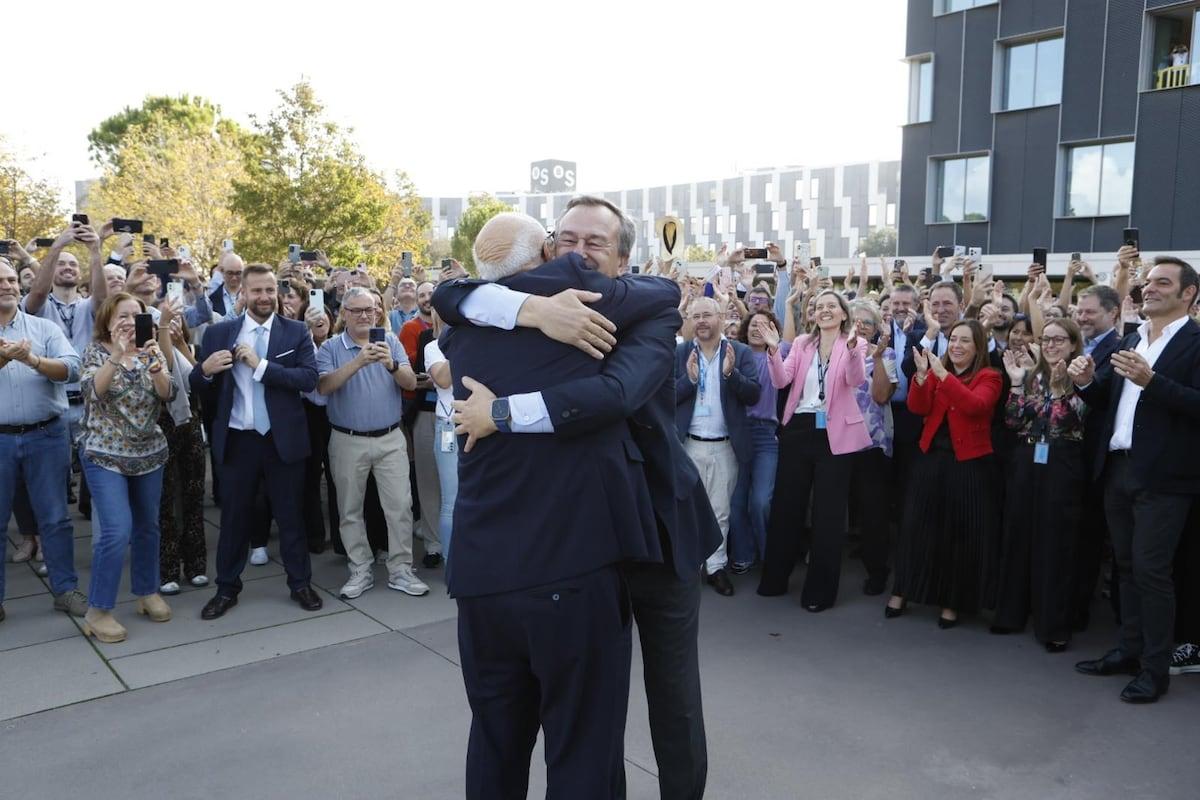
The economic year ends with a new record for the Ibex, an increase in Spanish employment, a worsening of the real estate crisis and high political uncertainty
This is what 2025 will be like: AI euphoria, Sabadell fights back and the ECB slams on the brakes
The economic year ends with new record rock production, Spanish employment at its highest level, a worsening housing crisis and huge political uncertainty
2025 had almost everything: a trade war, hostile corporate operations, a cycle change at the European Central Bank (ECB) and endless stock market movements that are not going away despite fears of an artificial intelligence (AI) bubble.The final balance dictates that the global economy holds up better than expected.Neither Trump's coverage nor the geopolitical tensions in the Middle East, Ukraine and now Venezuela were sufficiently disruptive.In this uncertain environment, Spain has done particularly well macroeconomically, with new records for contributors and strong growth, even when problems such as housing have worsened.To what extent this domestic and international pressure can continue next year, remains to be seen.These are some of the stories that marked the economic year.
Bank takeover: soap opera with a surprise ending.Even the best of Sabadell's managers did not expect it.By the afternoon of Thursday, October 16, the Catalan leaders of the board received the news they had been waiting for 17 months: BBVA's controversial bid had failed.Carlos Torres' shares fail with a guarantee of 25%, well below the minimum that the company has set as its target (over 50%) and 30% will allow the bank to go ahead with the second auction.The decision - driven by thousands of Sabadell's minority shareholders, but also by many lower ones supported by big funds - ends a long battle between the two clubs.And it has a result on the way: bringing Sabadell's headquarters back to Barcelona, which includes the promise of dividends.worth billions of dollars to business owners and conflict between the National Competition and Markets Commission (CNMC) and the government.
The result left the situation more or less equal.BBVA and its chairman managed to overcome the setback with historic profits, but they still have to solve the problem that prompted the takeover bid, the heavy reliance on the Mexican market.Sabadell, for its part, has scored an important goal, but has yet to decide whether it wants to take the big leap and push through a merger to compete with CaixaBank, Santander or BBVA itself.
Ibex 35 reached a new record.The year 2025 for the stock market begins with more than reasonable Abalo: the return of Trump will involve the American economy, leaving Wall Street in a better than the European stock market, and the banking sector, the engine of the Ibex 35, will not go much further.It doesn't take much time to turn the predictions into the dead letter of truth;The trade war has made Wall Street worse than Europe and the Ibex 35 banks have been opened from 12,000 to 17,000 points by .It was the best year since the creation of Ibex in 1993, and in the case of Santander the financial sector has increased by 127%.The change that marked the first month of the year with the historic collapse on Wall Street after the price bomb on April 2 has given way to a market where there are only signs of heating (especially in the United States).Bullish shows inertia.
Paradoxically, safe-haven assets such as gold have soared this year, and Trump's policies (including unbearable pressure on the Fed) have ultimately weakened the dollar.Thus, the collapse of the US currency has wiped out, in the eyes of Spanish investors, all the gains of the US stock market for the year, although the AI monoculture kept the S&P 500 in the maximum zone.
Trade war game.Tariff, as everyone knows by now, is one of Donald Trump's favorite dictionaries and was chosen as the word of the year by the Urgent Spanish Foundation (FundéuRAE).This 2025, 1 year since returning to the White House, the American president moved from words to actions with an aggressive trade policy based on unilaterally imposing taxes on dozens of trading partners, accusing Trump, often without any basis, For years they took advantage of his kingdom.
He began by first threatening Canada and Mexico in February, and in April celebrating what he called Independence Day and imposing tariffs on imports that he defended as "reversal."Then came months of threats and recessions that turned the world order global.Changed.
In order to stop the blow to the economy that these interest rates suggested, Trump has also put unprecedented pressure on Federal Reserve Chairman Jerome Powell, whose successor he is already looking for.I wanted Powell to cut interest rates, but Powell proved to be a resistant official.
Trump's economic policy 2.0 faces severe inflation and unemployment of about 3%, which in November reached its highest level since 2021. Meanwhile, the Supreme Court is investigating a case challenging the constitutionality of the White House's tariffs. In the unlikely event that a conservative majority rules against Trump's trade policies, it will lead to the defeat of the Republican economic agenda, which is losing patience with public opinion.It is also unclear how his administration will return the money collected by those tariffs, about 180 billion dollars, according to the Peterson Institute, by September.
The state controls Telefona again.For Telefona, 2025 was a year of drastic changes, marked by the beginning of the presidency of Mark Murtra, proposed by the Government to replace José María Alvarez-Pallet, and after the return of the state to the center of the operator.His arrival prompted a change in the direction of the company with a new strategic plan for 2026-2030 called Transform & Grow.Focusing on net income and balance sheets was no longer a priority, so he didn't hesitate to halve the dividend.
Murtra has repeatedly talked about a takeover (with Vodafone in Spain as a possible bite), although no deal has been reached.On the contrary, if you look abroad, Telefónica remains withdrawn in Europe and Brazil, and the accelerator has been stepped on to release the ballast in Latin America (Argentina, Peru, Colombia, Ecuador and Uruguay).In Spain, the company is making ERE which will be about 5,000 departures, with significant costs, which could lead to the highest annual losses in history.
Fear of the AI bubble.The word bubble has returned to the tech industry in 2025, reminiscent of the dotcom crisis 25 years ago.All eyes are on artificial intelligence (AI).After a year of strong stock market declines caused by the emergence of the Chinese company DeepSeek, technology companies started a race in October that drove the Nasdaq up 60%.Alphabet, Oracle and Nvidia doubled their value, and the chip giant even reached a capitalization of five trillion dollars, which is an unprecedented record.In parallel, startups such as SpaceX and OpenAI led multi-million rounds during which they practically doubled their value: Elon Musk's emerging company grew from 400,000 million to 800,000 million;and creator of ChatGPT, 300,000 to 500,000 million.Now their goal is a historic IPO in 2026.
But after the euphoria, concerns about an AI bubble spread in the last few weeks of the year.Companies like Oracle and SoftBank faced significant corrections of more than 35% from highs of 16% for Meta, 10% for Microsoft, and 8% for Nvidia.In Oracle's case, the market is worried about a high debt crisis that could halt its plans to invest in artificial intelligence.While some companies depend on others, this cyclical movement could boost valuations for tech giants.Nvidia has agreed to invest $100 billion in OpenAI, and OpenAI has reached a $300 billion computing deal with Oracle, which will also invest in Nvidia chips in parallel.
Spain sails without budgets.Spain is facing an unprecedented budgetary situation: 2026 will begin with an extended account for the third consecutive year.On January 1, the 2023 Budget will remain in force, the last approved by Congress and the longest in the democracy.Although the extension is not an exception in recent history - it has happened nine times - it is true that in two years the Government legislature did not present a new draft of public accounts due to the lack of sufficient support in the Cortes.
Thus, budget paralysis is perhaps the most obvious symptom of political weakness.The coalition government lacks a parliamentary majority, the investment bloc has broken down, a situation the government is trying to overcome with budget amendments and orders. Civil servants' pensions and salary hikes are the latest example.European funds, which have made steady investments and partially compensated for the lack of new budgets, are also in the final phase.The recovery process will end in 2026.
As a result, the approval of the new budget has been postponed until next year.The executive has assured that it will present them in the first quarter, the same schedule if it manages to discuss the reform of the regional funding system.Another big pending obligation of the legislature that remains unresolved.
half a million workers.Spain was the country that created the most jobs last year in Europe.According to Eurostat, the country added half a million new jobs from the third quarter of 2024 to 2025, much more than the increase of 223,000 jobs in France or 160,000 in Portugal and in a completely different situation than in Germany or Italy, which decreased by 211,000 and 56,000.
In addition, the trend of the Spanish labor market, on the back of economic growth in recent years, is increasing faster than last year.According to data from the National Institute of Statistics, an increase of more than about 200,000 who registered last year.The acceleration has reduced the unemployment rate to 10.5%, but it is still the worst percentage in the continent and almost twice the average of the European Union.
The improvement of the Spanish labor market is mainly entrusted to foreign workers and dual citizens.They offer six out of ten new jobs, which rarely change the physiognomy of the country's labor market.Hispanics make up 78.4% of the working population, which is lower than ever.
The cut in working hours has been misplaced.On September 10, at the Congress of Deputies, one of the biggest financial failures of the executive power occurred in this legislature.On that day, the PP and Vox, with the help of Juntsin (the government's investment partner), defeated a bill to reduce the legal maximum working day from 40 to 37.5 hours a week.This measure was promoted by Sumer in the government agreement with the PSOE and the eleventh month.After intensive negotiations, the Ministry of Labor was only able to agree on a regulatory text with the trade unions CC OO and UGT.The SED text, which was finally passed in the first trial in the House of Representatives, will affect about 12.5 million employees and reduce their working hours more or less.Pressure exerted by employers' associations - especially the Catalan organizations Junts - the measure was adopted with a majority of 170 to 178 votes.Rejected.The companies argue that this reduction in working hours will increase labor costs by about 7%.And research services such as BBVA Research estimate that even if these cuts do not increase productivity and that they do not cut wages, they will increase unit labor costs by 1.5%, subtract 0.7 percentage points from two-year GDP growth and 0.8 points from employment growth.
Tourism record.According to the forecast planned by the government, tourist arrivals in Spain will stop this year, with 98 million tourists (4% more) and a cumulative expenditure of 135,000 million euros (7% more).This is the highest record in the historical series and the stability of a sector that once again generates 13% of GDP and 12% of employment, as it did before the pandemic, after the biggest crisis in its history.The conclusion, however, remains inactive for not reaching 100 million tourists, which was considered easy at the beginning of the year and which has become a chimera since the summer due to a slowdown in arrivals in key markets such as Germany or France.In addition, the resurgence of tourist phobia continues, the economic activity that ends up with tourists in the most visited places and which has a direct impact on the housing crisis leads to a boom in tourist apartments, which are traditional rentals.offers more profit to the owners than
The ECB has frozen interest rates.The cycle of falling money prices ended this year after eight virtually continuous declines.This decline has coincided with an easing of inflation, which has picked up since the energy crisis that followed the invasion of Ukraine and is now very close to the ECB's target level.Frankfurt has held four meetings to keep interest rates on hold, and analysts see no need for a hike or cut in the near term.Which is 2% to 2.3% repayment and is already costing those who review them every six months.However, these levels are low enough to make mortgages more accessible to many homebuyers, helping to fuel the sales boom Spain is experiencing.
The Franco-German crisis.The axis around which Europe has revolved for decades shows significant signs of weakness in 2025. In Germany, Friedrich Mertz was elected the new chancellor in May, but he has not yet shown significant signs of improving his leadership in the country: growth forecasts for this year are between 0% and 0.2%, and a complicated competitive environment in Chinese trade. In the automotive sector. Berlin hopes that the government's economic stimulus in infrastructure and defense will begin to be feltin 2026.
Meanwhile, in France, the inability to implement reforms and the political crisis are leading to moments of enormous tension, such as when the risk premium rose above Italy's in September, becoming in some cases the highest in the Eurozone.Markets have loosened the code somewhat, but are still on alert: Parliament suspended the reform of the controversial pension in November, a condition of the Socialists not to leave Prime Minister Sébastian Lecornu, but it seems that sooner or later its leaders will have to make unpopular decisions to reduce the deficit.
Bitcoin Rolls.2025 will be a golden year for cryptocurrency, but it was a stress test.The return to the White House of Trump, the first crypto-president of the United States, predicted more adoption, slower regulation and a more favorable attitude towards digital assets.He has partially fulfilled his promise: more banks are adding them to their offerings, companies are accumulating them in reserves and big managers are offering to add them to their portfolios.Thus, Bitcoin is obsolete: it has lost its volatility and speculative character.
However, the international context has complicated the way up.Geopolitical tensions, concerns about a possible AI bubble and doubts about the Fed's monetary policy are weighing on the cryptocurrency market.The return of Trump's tax fury has dampened euphoria and fueled deflation.
If the year started off on the wrong foot, the summer was a good one: the approval of the first stablecoin regulation in the US marked the before and after.But the president's threats against China in October cooled sentiment again, freezing demand within 24 hours, drying up liquidity and halting momentum.Bitcoin hasn't held its head high since then: it's down 6% for the year, down 30% from its peak.2025 will be remembered not as a year of great start-ups, but as a maturing challenge for an increasingly integrated and controlled ecosystem in financial markets.
Air Europa, the epicenter of the mild.Air Europa is in the spotlight in the transport sector.The two largest airline groups, Air France-KLM and Lufthansa, signed for a real auction involving the allocation of part of the capital.The Spanish company is one of the few references in the industry that remains outside a larger alliance and has caught up with the current sale process of the Portuguese company TAP.Finally, neither French nor German.The Hidalgo family, the main shareholder of Globalia, has made it a priority to maintain control and profited from it by transferring 26% of the shares to another giant, Turkish Airlines, for EUR 300 million.
The number one goal was achieved: the own funds accumulated thanks to this injection and the explosion in demand for flights made it possible to pay off a year earlier the state loan of 475 million allocated to SEPI Air Europa during the epidemic.The financial aid was urgent because of the cost of the rescue and the controversy surrounding it, amid investigations into the scale of the decisive intervention by former transport minister José Luis Abalos or Begona Gómez, the wife of the government's president.The second objective of Air Europa is to achieve synergy with shareholders.The Turkish company operates a fleet of 495 aircraft compared to the Spanish company's 57 and has better access to manufacturers during a period of aircraft shortages in the market.Air Europa, which is now debt-free, can use this privileged position to accelerate its development.The Turkish company will find a site to operate its aircraft in its Spanish subsidiary.And they promise to implement their ties with Latin America and Asia.
Change of control in Talgo.In the industrial sector, this December the curtain was lowered on the two-year soap opera of Talgo's change of control.A Basque consortium led by José Antonio Jainaga took 27.4% for 156.7 million, while SEPI took 7.8% to block the operation.Without public intervention, there was great skepticism from the banks.The hard core moved the headquarters from Madrid to Vitoria, and launched with a renewed funding structure that gives life to the company: up to 770 million in credit from CaixaBank, BBVA, Kutxabank and ICO, among others, and 500 million in guarantees.As the government oversees the change of hands of the train manufacturer, the public company Cesce has emerged as a guarantor.Jainaga, who has strong industrial experience at the head of Sidenor, is expected to implement a plan that will solve the problem of the lack of plant capacity being targeted.
Meet her fans Álvaro Bayón, Ramón Muñoz, Raquel Pascual Cortés, Emilio Sánchez Hidalgo, Nuño Rodrigo, Elisa Tasca, Laura delle Femmine, Gorka R. Pérez, Javier Magariño, Santiago Millán, Iker Seisdedos (Vašingtonas) and Carlos Molina.
Your subscription is in use on another device
Want to add another user to your subscription?
If you continue to read on this device, you will not be able to read on the other side.
ArrowYour subscription is being used on another device and you can only access EL PAÍS on one device at a time.
If you want to share your account, you can change your subscription to premium mode and add another user.Everyone logs in with their own email account, allowing you to personalize your EL PAÍS experience.
Do you have a business plan?Go here to sign up for multiple accounts.
If you don't know who is using your account, we recommend changing your password here.
If you choose to continue sharing your account;This message will appear indefinitely on your device and the devices of others using your account, affecting your reading experience.Digital subscription terms and conditions can be found here.
About the board
New Year's Eve plans in Bogota 2025: what to do and where to celebrate the arrival of 2026.
Sheinbaum's two thousandth year
From Sanchez's smiling balance to Abascal's dramatic diagnosis: political messages at the end of the year
Mbappé, baja por un esguince de rodilla para el partido contra el Betis, es duda para la Supercopa
Most viewed
- The National Court upheld Robles' decision to remove Franco's name from the regimental flag
- Pension at age 66 and 8 months until end: the new retirement year is 2026
- Beyoncé becomes the fifth singer to enter the billionaire club
- Bukele says that he wants to continue leading El Salvador for "another ten years".
- An oil tanker being chased by the United States in the Caribbean painted the Russian flag as it tried to escape